
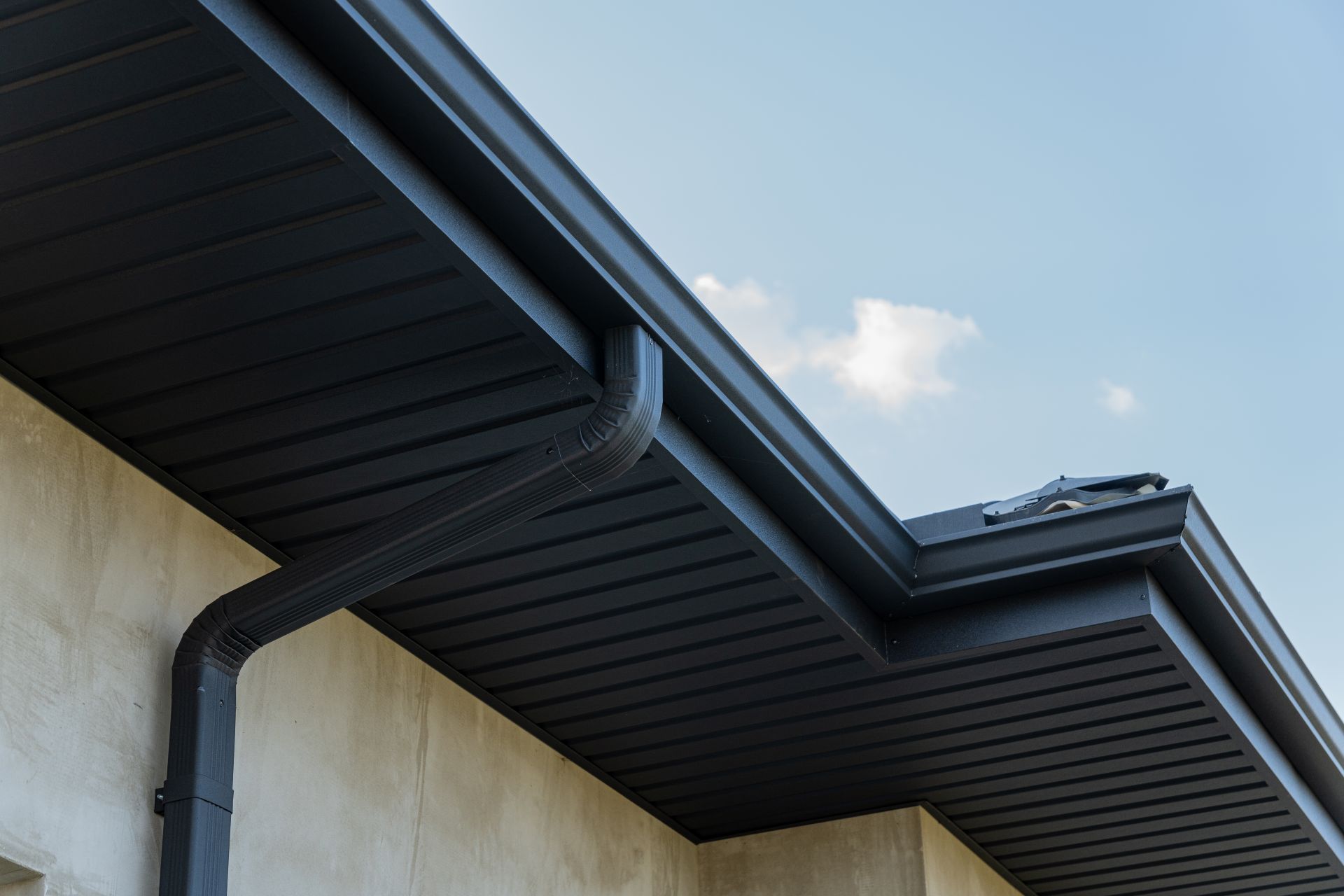
Drainage Systems That Actually Prevent Flooding
Seamless Gutter Services in Eastern Colorado and all of Kansas for properties experiencing foundation erosion or water pooling near structures
Water pooling against your foundation, soil erosion along the roofline, or basement moisture problems indicate that roof runoff lacks proper management. Seamless gutters address this by moving water away from structures before it causes foundation settling, landscape damage, or interior moisture intrusion. CNC Marez Exteriors LLC fabricates and installs custom seamless gutter systems for residential and commercial properties in Eastern Colorado and all of Kansas where spring thunderstorms deliver high-intensity rainfall that overwhelms undersized or improperly sloped drainage systems.
Seamless gutters are formed on-site to match exact building dimensions, which eliminates the leak-prone seams found in sectional gutters every ten feet. The continuous design reduces failure points, and proper installation includes calculating slope to move water toward downspouts even during heavy flow. Kansas weather conditions require systems that handle both sudden downpours and winter ice formation without pulling away from fascia boards.
Request an installation estimate that includes measurements of your roofline and a drainage design for your property's layout.
What Seamless Gutter Installation Accomplishes
Installation begins with measuring your roofline and calculating how much water each roof section sheds during typical rainfall, which determines gutter width and downspout placement. The seamless gutter material gets formed to length on-site using portable equipment, then mounted with hangers spaced to support the weight of water-filled gutters during storms. Drainage system design considers where water should discharge, how far from the foundation it needs to travel, and whether grading already directs flow away from the structure.
After installation, you notice water flowing through gutters and exiting at downspouts rather than sheeting off the roof edge, soil along the foundation staying intact instead of washing away, and no water pooling against basement walls or crawl spaces. Landscaping near the roofline no longer shows erosion channels, siding stays cleaner because splash-back decreases, and you avoid the basement moisture that leads to mold growth and structural concerns.
Multiple color options allow matching or contrasting with your trim and siding, and material gauge affects longevity under snow load and ice formation. The system includes end caps, downspout elbows, and extensions that complete the water path from roof to proper discharge points. Professional installation ensures gutters slope consistently toward downspouts without sagging sections that collect standing water and debris.
Common Questions About This Service
Property owners typically want to know about performance differences, material options, and maintenance after seamless gutters are installed.
What makes seamless gutters perform better than sectional systems?
Sectional gutters use connectors every ten feet that develop leaks as sealant degrades and metal expands with temperature changes, while seamless gutters eliminate those joints across long roofline runs so water stays contained within the channel instead of dripping through failed seams.
How is gutter slope calculated during installation?
Each gutter run needs approximately one quarter inch of drop per ten feet of length to move water toward downspouts without creating visible sag, with calculations adjusted based on roof area and expected rainfall intensity in Wichita where spring storms deliver high volumes quickly.
What happens if downspout placement does not match property drainage?
Water discharges near the foundation even though gutters collect it properly, which defeats the system's purpose and requires adding extensions or underground drainage pipes that carry runoff to areas where it can disperse without causing erosion or moisture intrusion.
Why do some gutter systems pull away from fascia boards after installation?
Inadequate hanger spacing or undersized fasteners allow gutters filled with water to sag under weight, especially during winter when ice formation adds load, so proper installation uses hangers every two feet maximum and fasteners that penetrate into rafter tails rather than just fascia boards.
How do seamless gutters handle Kansas weather conditions?
The continuous design flexes with temperature swings without opening seams, properly sloped systems drain completely so standing water does not freeze and expand inside the channel, and heavier gauge materials resist denting from hail impacts that frequently occur during severe thunderstorms in this region.
CNC Marez Exteriors LLC designs drainage systems based on your property's specific roof area, grading, and water management needs. Schedule a site visit to determine proper gutter sizing and downspout placement for your building in Eastern Colorado or Kansas.